
 Find a product
Tuesday, August 20, 2024
Brush or Brushless? Consider All Your Needs for Efficient Fume Evacuation
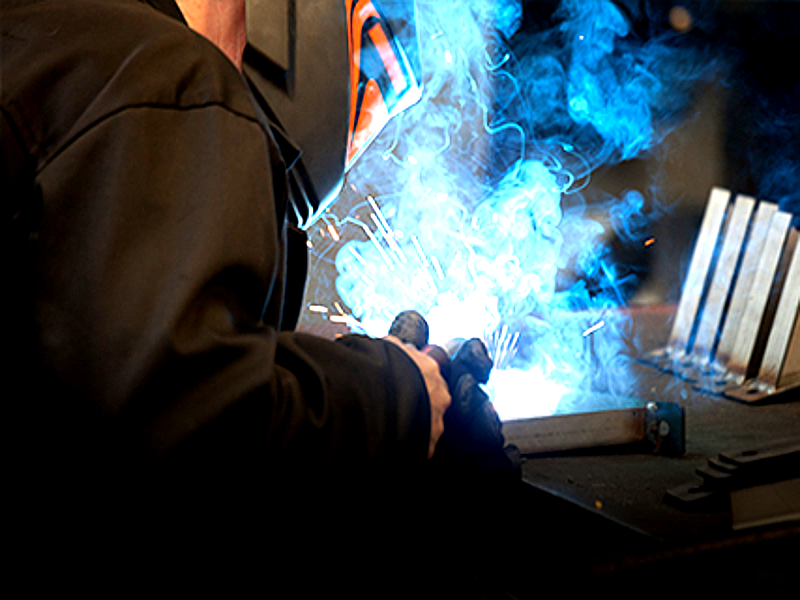 Fume evacuation is a specialized industrial application, whether for heavy industry (soldering and metal-cutting) — or small-scale medical use such as a suction tool at a dental office.
 Small-scale uses also include medical applications such as laser fume evacuation. For example, in a dermatologist’s office, some of the equipment contains a brushless blower to remove any skin cells that have been cauterized, along with the smell of burning flesh.
These laser fume evacuation solutions require high pressure and minimum flow at the tip of the laser to make sure that everything is captured.
For mid-sized applications such as stand-alone soldering stations, fume evacuation takes the form of capturing air as opposed to particulate matter. When it comes to large-scale industrial applications like laser cutting machines, the units are large with a good-sized hose to evacuate fumes. They need to be extremely strong and reliable to handle long-duty cycles.
No matter what type of fume evacuation device you’re designing, a blower/motor will have to be fitted into the application correctly the first time.
A Matter of Size and Performance
For each type of blower, different performance levels depending on size, voltage, flow, and impedance are required. Due to their simple design, brushed motors typically provide a higher air performance than brushless motors. They also work only as an open-loop system, while brushless motors can be designed as open or closed-loop systems to manage speed control.Brushed motors are designed to work with a single voltage such as 110V for a blower. If you require a higher air performance, you must increase the voltage. Conversely, many brushless blowers provide consistent performance across a voltage range such as 108-230V so that the same product worldwide.
Next, consider size. Does your final product need a small blower solution? Perhaps you have size constraints for the result.
By knowing the space available, you can make an educated decision about what works best for your application. Size and weight may play an important role, especially if you are developing a product meant to be portable. You'll want to consider smaller options and different sizes of motors that may have performance like what you need.
Main Application Challenges
Most fume evacuation blowers must run from 8 to 112 hours per day, so product lifespan is a leading concern for users. Because of this, most of these types of blowers are brushless so they will provide a longer motor life.Another advantage of brushless blowers is that speed control is often required in many applications such as standalone soldering stations. Brushless blowers allow you to select your level of evacuation (low, medium, high) — or to use multiple process step settings.
It is sometimes easier to design a brushless blower with built-in speed control rather than to have the knowledge and time to create a single-speed blower with separate speed control systems to vary performance levels.
Should You Always Go Brushless?
Brushless blowers are most used in the fume evacuation applications described above, regardless of motor size or industry type. These are the main products chosen for these applications because of the need for long lifecycles and the variable speed feature needed or desired. However, brushless blowers are considerably more expensive than brush blowers — and have a decreased lifetime in hot and rugged environments.Brush motors are often more suitable for mid-range industrial fume applications, or those in harsh environments. They are more affordable than brushless blowers and can be an option in some applications where the motor isn’t constantly running, or not running for extended eight-hour-plus periods of time. Brush motors are also ideal for use in environments where brushless solutions would not endure due to all their sensitive electronics.
At Bison, we manufacture a full line of brushless blowers as well as longer-life brush motor models such as our Lamb® brushed vacuum motors. Lamb motors are made with a curved Infinity™ carbon brush — and are specified to last for 1500 to 3000 hours of operation depending on the power level.
Conclusion
When it comes to selecting a blower to fit your fume evacuation application, you want to make sure all your needs are considered. At Bison, we provide brushless and brush blowers for all the fume evacuation applications described here, and more. Let us help you reduce your energy costs and improve application performance over the life of the blower. Reach out now to begin your upgrade.
Engage with our engineers, locate an authorized distributor or connect with customer and technical support.