
 Find a product
Thursday, October 09, 2025
Solving Grid Challenges with Smart Switch Operators
Modernizing the electric grid involves more than upgrading control systems with sophisticated software—it requires embedding sensors and automated controls across the entire system. It's not only the digital brains that manage the network but also the physical devices, like the motors that automate switch operations, which serve as the system’s hands. Only by integrating sensors and robust controls throughout the entire grid can we fully realize the vision of a smart, flexible, high-capacity, efficient, and reliable power infrastructure.
The Drive to Modernize the Power Grid
The need for increased capacity and greater flexibility is driving the modernization of the power grid. The rapid electrification of transportation and HVAC systems, combined with the rise of artificial intelligence technologies, is placing unprecedented demands on the energy network.To meet these challenges, the grid must become more dynamic, capable of supporting new technologies while optimizing efficiency and ensuring reliability.
Integrating Distributed Energy Resources (DERs), such as rooftop solar panels, battery storage, and wind farms, adds further complexity. Advanced fault detection, self-healing capabilities, and more intelligent controls are essential to managing these resources effectively. Grid-level energy storage solutions, like battery buffers, are also critical for balancing supply and demand as the energy landscape evolves.
At the same time, the grid must address the growing need for resilience. Aging infrastructure, much of it built decades ago, struggles to meet today's energy demands. Upgrading these outdated systems is vital to ensuring reliability and avoiding costly outages that disrupt businesses and communities.
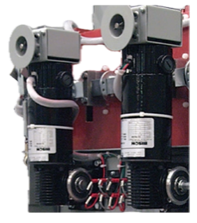
Compact, specialized motor and gear systems “drop in” to existing equipment to automate switch operations. Seamlessly integrating with SCADA and ADMS systems, they enable real-time monitoring and control, boosting efficiency and reliability.
They reduce service disruptions, save labor, and enhance safety, especially in hazardous conditions like storms or flooded underground vaults.
The increasing frequency of climate-related disasters, including hurricanes, wildfires, and heat waves, highlights the urgency of a resilient grid. Modernizing the grid to withstand and recover from extreme weather events is no longer optional, it’s essential for the stability of our energy future.
Advanced Control Systems for a Smarter Grid
The challenges posed by outdated infrastructure and climate-related disasters are accelerating the adoption of advanced technologies like Supervisory Control and Data Acquisition (SCADA) systems and Advanced Distribution Management Systems (ADMS). These innovations enhance grid visibility, allowing operators to monitor and manage energy flow in real time. This level of control is crucial for quickly addressing disruptions and preventing widespread outages.Additionally, ADMS makes the grid smarter and more efficient by leveraging predictive analytics. ADMS can forecast energy demand, identify potential issues before they occur, and optimize the flow of electricity across the grid. It also supports conditional predictive maintenance, allowing utilities to address equipment issues proactively based on real-time data and usage patterns.
The Key to Successful Digitization: Fully Integrated Systems
Smart grids follow the dynamics of the overall global shift toward digitization, aligning with advancements in Industry 4.0. Smart factories go beyond advanced software and analytics. It is a complete system that integrates IoT sensors, robotics, and distributed controls throughout the production line, creating a system that’s more productive, flexible, and transparent.By offering real-time visibility into the production process and component conditions, these automated systems streamline operations, minimize downtime, boost productivity, lower labor costs, and enhance preventive maintenance.
Similarly, smart grids operate as fully integrated systems that rely heavily on a network of advanced sensors, controls, and communication technologies.
Devices such as Phasor Measurement Units (PMUs) provide real-time monitoring of electrical grid stability. Other essential sensors include voltage and current transducers, power quality transducers, and temperature sensors, which monitor key parameters to detect and prevent potential issues. Smart meters also enable two-way communication between utilities and consumers, allowing for real-time energy usage tracking, dynamic pricing, and demand response capabilities.
The Role of Motorized Switch Operators in Grid Automation
Among the various distributed components in today’s modern grid infrastructure, motorized switch operators are among the most critical. These devices automate switchgear functions, eliminating the need for manual operation of equipment such as circuit breakers, load break switches, air and SF6 insulated disconnects, and medium- or high-voltage sectionalizers.By automating these processes, motorized switch operators enhance precision, speed, and safety. They reduce the risk of human error and ensure smoother grid operations. Moreover, these devices integrate seamlessly with SCADA and ADMS, enabling real-time monitoring and control for improved efficiency and reliability across the grid.
Motorized switch operators aren’t just valuable for supporting the smart grid, they also offer practical business benefits on their own, even without smart grid integration. Automating switch operations eliminates the need to send out trucks and personnel every time a switch needs to be operated. This saves significant time, reduces service disruptions, and lowers fleet operation and labor costs.
Motorized switch operators also improve safety. During storms or emergencies, sending crews to remote or hazardous locations can be dangerous. Underground vaults, for example, can flood, turning them into high-voltage safety hazards. Automating these tasks ensures that switches can be operated without putting workers at risk.
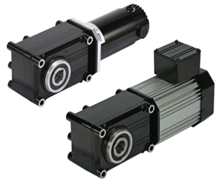 The gearmotor has been customized to meet the precise size and performance requirements of various OEMs’ switchgear equipment, enabling seamless retrofitting to upgrade from manual to automated operation. This compact, robust, and highly efficient gearmotor boasts the industry-lowest 4.5-amp draw. Optional features include a hermetically sealed stainless steel enclosure for 100% watertight performance, cold-resistant lubricants down to -40°F, and an integrated encoder for precise position reporting.
The Importance of a Reliable Motor and Gear System
When automating switchgear operation, the reliability of the motor and gear system is crucial. These components must perform flawlessly every time, ensuring consistent operation in all conditions, from routine use to extreme situations like storms or grid emergencies.Given that the switchgear in power grids is designed to operate reliably for decades, motor operators must be engineered with exceptional durability and dependability to ensure they surpass these long-term performance requirements.
Standard off-the-shelf motors often fail to meet the specific demands of medium- and high-voltage switchgear systems. General-purpose motors are typically not engineered to withstand extreme environmental conditions or the high number of operational cycles required in the power grid.
"Drop-In" Solution
Utilities need to modernize infrastructure without expanding vault sizes, and switchgear OEMs want to enhance functionality without altering layouts. A "drop-in" solution offers a seamless and straightforward way to integrate advanced automation into existing systems, saving time, reducing costs, and minimizing downtime.
Key Attributes of a Reliable Motor and Gear System
To meet the unique challenges of medium- and high-voltage switchgear, motor and gear systems must balance two critical constraints, compact size and limited amperage, while still delivering exceptional performance in speed and torque. Here's why these attributes matter:- Compact Size: Space is at a premium in power grid applications, especially for retrofits where manual switchgear is being converted to automated systems. Motors must fit within the existing contours and confined spaces of switchgear installations. Even for new equipment, utilities demand compact designs to avoid costly expansions of service vaults or installation areas.
- Limited Amperage Draw: Motors often need to operate on as little as 5 amps, far less than what's typical for other applications. Developing a motor and gear system that performs reliably within such constraints is essential to ensuring compatibility with power grid environments.
- High Speed: Fast operation is critical for the safe and effective functioning of switchgear. The ability to open and close switches rapidly minimizes the risk of dangerous electrical arcs, which can cause severe equipment damage, pose safety hazards, and lead to cascading power grid failures.
- High Torque: Overcoming the significant spring force of switchgear components requires motors with high torque. This ensures smooth and consistent operation, even under demanding conditions.
The challenge lies in meeting all four of these requirements. Compact size and low amperage requirements often compromise the speed and torque needed for reliable performance. That’s why motor and gear systems must be specifically engineered and rigorously tested to meet the stringent demands of medium- and high-voltage switchgear applications. Only purpose-built solutions can provide the durability, efficiency, and reliability required to support the long-term stability of the power grid.
Meeting Environmental and Installation Demands
Beyond size, power, and performance considerations, motor and gear systems for medium- and high-voltage switchgear must also meet stringent environmental and installation requirements.For example, these systems are often exposed to extreme weather conditions, requiring watertight designs to ensure durability in harsh environments. This is especially critical for applications where switchgear is housed in underground vaults that may be prone to flooding or moisture intrusion. Additionally, using specialized lubrication that performs well in both high and low temperature extremes is essential to maintain reliability and efficiency.
Equally important is the ease of installation. Rotary motors provide a significant advantage over linear actuators in this regard. Unlike linear actuators, which require precise calibration, a process that is time-consuming, labor-intensive, and potentially error-prone, rotary motors eliminate this complexity. Their straightforward setup not only reduces installation time but also enhances reliability by eliminating the need for manual adjustments.
To address the diversity of designs in switchgear systems produced by various OEMs, it is essential to work with a motor and gear manufacturer capable of delivering customized solutions. Retrofits often demand a tailored approach due to the unique configurations and requirements of different equipment. Partnering with a company that not only offers bespoke solutions but also has deep expertise in power grid applications is critical.
With over 60 years of experience, Bison offers the kind of practical expertise and adaptability needed to support custom motor and gear solutions across a wide range of switchgear configurations. This approach is exemplified in Bison’s recent case study, where a custom DC motor operator was developed to retrofit a legacy medium voltage switchgear system for a major utility provider.
Future-Proofing Systems with Reliable Automation
Automating switchgear operation is a vital step in advancing the modernization of power grids, forming a critical component of smart grid development. Reliable, high-performance motor operators enhance operational efficiency and ensure longevity, providing a solid foundation for evolving power systems.No matter where a utility is in its modernization journey, investing in durable and efficient motorized switch operators delivers lasting value. This forward-thinking approach not only enhances current operations but also ensures systems are ready to adapt and evolve as modernization advances.
Ready to take your grid strategy to the next level? Explore how robust switchgear solutions are solving today’s grid challenges.

Engage with our engineers, locate an authorized distributor or connect with customer and technical support.