
 Find a product
Thursday, October 22, 2026
How To Select The Right Stepper Motor For Your Selection
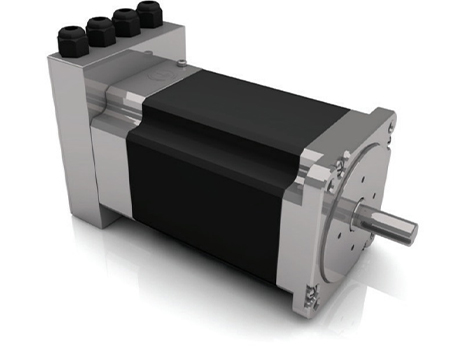
Selecting a Stepper Motor: Key Factors to Consider
Stepper motors are used in a wide range of applications that demand accurate positioning and controlled movement. From CNC machinery and robotics to medical devices and packaging systems, selecting the appropriate motor is essential for achieving reliable performance.The process involves more than simply choosing a motor size. Engineers must consider torque, speed, positioning requirements, environmental conditions, and control options to identify the most suitable solution.
Start with the Load Requirements
A clear understanding of the application's load characteristics is the foundation of motor selection.
Torque Requirements:
The motor must provide sufficient torque to move and hold the load during operation. When evaluating performance, consider:
• Holding torque
• Dynamic torque requirements
• Application load characteristics
Properly matching motor torque to system requirements helps ensure dependable operation.
Speed Requirements:
Stepper motors are well suited for applications requiring controlled motion at low to moderate speeds. Defining the desired operating speed is important when evaluating motor performance.
Finding the Operating Point
The relationship between speed and torque is critical. The application's operating point should fall within the motor's torque-speed curve to ensure reliable operation.Choose the Appropriate NEMA Size
The motor frame size should align with both torque requirements and available installation space.NEMA 17
• Flange size 42x42mm and available in various lengths• Suitable for compact systems
• Common in CNC equipment, intralogistics robots (AGV,LGV,…) and medical devices (pump, syringes,…)
NEMA 23
• Flange size 57x57mm and available in various lengths• Designed for more demanding automation requirements
• Frequently used in CNC machinery, industrial equipment, intralogistics robots (AGV,LGV,…) and agriculture machinery
NEMA 34
• Flange size 86x86mm and available in various lengths• Higher torque capability
• Suitable for packaging systems, heavy-duty motion control applications and agriculture machinery
Evaluate Positioning Accuracy
Positioning accuracy is one of the primary reasons many automation systems use stepper motors. Hybrid stepper motors with a 1.8° step angle provide accurate movement and support micro stepping for finer resolution. Applications requiring precise positioning can benefit from this level of control and repeatability.Consider the Operating Environment
Environmental conditions can influence long-term motor performance.Temperature:
The motor should be suitable for the expected operating temperature range.Protection Requirements:
Applications exposed to dust or moisture may require additional protection. Depending on the environment, motors can be configured with different IP protection levels.Determine Whether a Gearbox Is Required
In some applications, additional torque is needed without increasing motor size.Benefits of Planetary Gearboxes
• Increased output torque
• Improved load handling
• Greater application flexibility
Integrating a gearbox can help meet demanding performance requirements while maintaining accurate positioning.
Decide If Encoder Feedback Is Needed
Certain applications require position monitoring or additional feedback.Stepper Motors with Encoders
Adding an encoder provides real-time position feedback, supporting applications where enhanced monitoring and control are beneficial.
Encoder-equipped solutions can be considered for more advanced and safety critical applications requiring closed loop motion-control.
Select the Appropriate Controller
The controller is an important part of the overall motion-control system.Available options may include:
• Step & Direction controllers
• RS485 communication-based solutions
• Closed-loop BUS control solutions
• Industrial Ethernet
• CANopen
Selecting the right controller helps ensure compatibility with both application requirements and system architecture.
Consider Available Customization Options
Standard motors do not always meet every application requirement.Customization options can include:
• Shaft modifications
• Cable configurations
• Connector selections
• IP protection enhancements
• Gearbox integration
• Encoder integration
• Controller integration
• Firmware
These modifications allow the motor solution to be adapted to specific operating environments and machine designs.
Final Thoughts
Selecting the right stepper motor requires balancing torque, speed, positioning accuracy, environmental conditions, and control requirements. Evaluating these factors early helps ensure reliable performance and long-term application success.Need help selecting the right stepper motor? Contact our team to discuss your application requirements.

Engage with our engineers, locate an authorized distributor or connect with customer and technical support.